
Montezuma Well
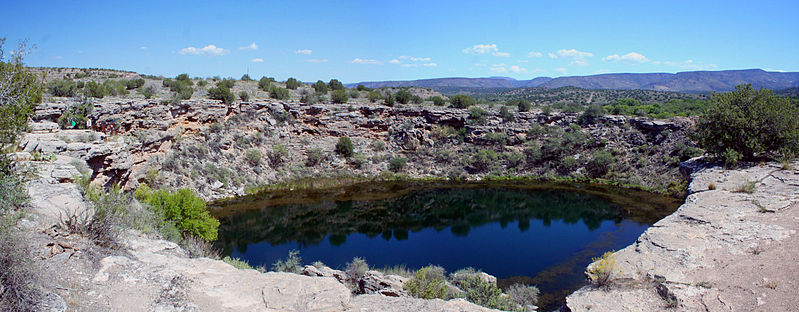
Montezuma Well is an ecosystem unlike any other. A collapsed limestone sinkhole located in the juniper-mesquite shrublands of Verde Valley, Arizona, it holds a 55-foot-deep body of water so rich in CO2 and so thin in oxygen that the heavy ambient air makes a trek through the area feel like a tranquil dream. Two hot springs feed 1.5 million gallons of 76º water into the well every day. The well’s lack of oxygen, combined with a high arsenic content, also means that it hosts the largest concentration of endemic species of any North American spring. These are life forms found nowhere else. Rare leeches, amphipods (fingernail-sized crustaceans that resemble shrimp), water scorpions, and algae inhabit the water although fish cannot survive there. The Montezuma springsnail lives on the shore, and a brace of ducks has chosen to make the well its migratory home, nonchalantly traversing the surface of a liquid pantry that stores an endless supply of food. Ironically, then, the well’s harsh water chemistry ensures a stable living environment for certain species that thrive in and around it.
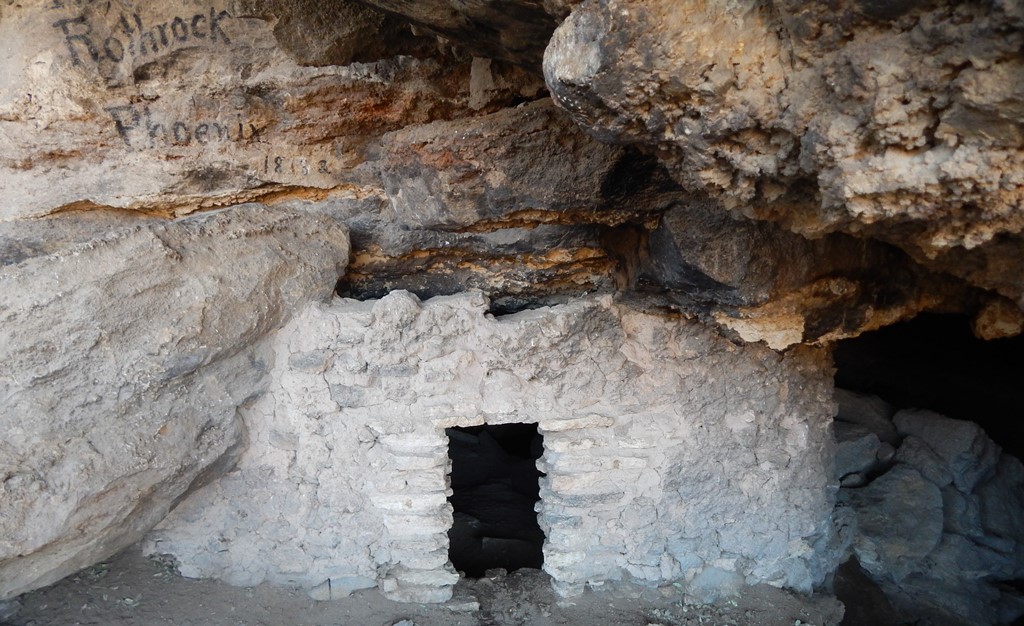
Humans have gravitated toward the site with equal intensity. Prehistoric people took advantage of the well’s unique attributes very early on, probably from the moment they found it. Human occupation of the area began at least 10,000 years ago, and certain groups started settling there in earnest around 2,000 years ago. The Hohokam tribe built one-room houses in the area as far back as 600 AD, and the Sinagua started building cliff dwellings in around 1125 AD. A group of Sinagua residents embedded a living space at the base of one of the rock walls, almost at water level and next to a tunnel of trees. White settlers and explorers have left their mark there, too. To the upper left of the dwelling’s entryway, for instance, one can see graffiti painted on a rock wall, left there by George Rothrock, the first photographer to visit the area in 1878.
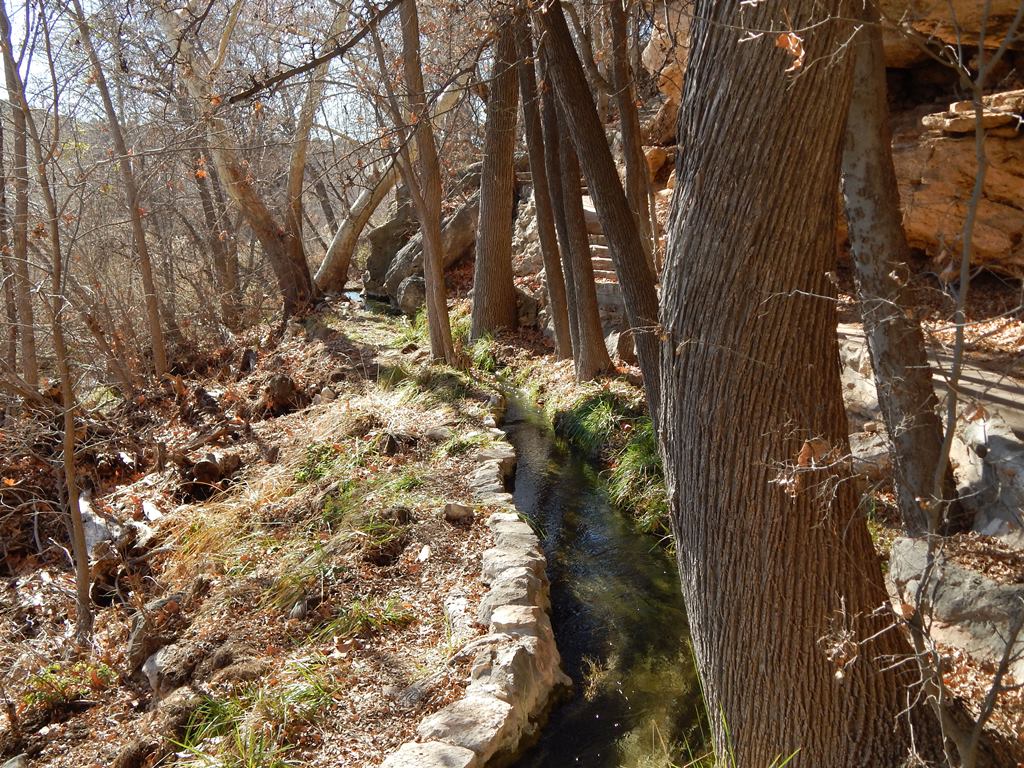
The fact that the well is so closely associated with the power of water speaks volumes to pressing environmental concerns. Maintaining adequate water supplies will be humanity’s greatest challenge in the coming decades, and hopefully, Montezuma Well will continue to serve the needs of the region like a dependable relative since it brings life to an arid ecosystem that receives less than 13 inches of rainfall a year. Its spring water channels through a narrow cave in the limestone and into an irrigation ditch beyond the well walls. Downstream residents use the aerated water for multiple purposes, an intriguing fact given that sections of the ditch were built over 1,000 years ago to irrigate fields of corn, beans, and squash.
The area immediately around the well flourishes, too. The temperature by the ditch is about 20 degrees cooler than at the rim of the well, and visitors can walk down a paved trail to get there. Arizona sycamore and velvet ash trees populate several spots between the well’s outer cliff wall and nearby Beaver Creek. Cool to the touch, they shelter the area from wind and noise. This spot is also an ideal habitat for Roadrunners, Robins, Great Horned Owls, Woodpeckers, and Goldfinches, to name a few inhabitants. An abundance of gorgeous wildflowers add to the biodiversity as well, to include the Yellow Columbine, Indian Paintbrush, and Pale Evening Primrose. One can see why the location serves as a perfect picnic site for tourists and locals alike.
For these and other reasons, some think Montezuma Well is a life-enhancing power vortex. Along similar lines, many Native Americans consider the well a sacred spiritual center that links them to an ancient ancestry. Yavapai tradition claims that the tribe sprang from this location, so reverence for the well continues to this day. The Pima Indians who currently live in the region feel particularly connected because they are probably descendants of the Hohokam. Navajo, Hopi, and Yavapai-Apaches still visit the site on a regular basis. Of equal importance, humans have always shared the area with an all-star cast of their animal cousins, to include mountain lions, rattlesnakes, beavers, deer, and raccoon. Foxes raise their families in the caves. Sonora mud turtles sun themselves on the rocks. A rich cycle of life defines the nature of existence with stunning clarity.
Call it a power vortex or spiritual center as need be, but of greatest importance, Montezuma Well should be considered a highly successful environmental model for the new millennium that must be protected. President Teddy Roosevelt declared the area a national monument in 1906, which means that to this day, the American people and the government that serves them ought to feel obliged to keep the well in as pristine a state as possible. Unfortunately, increasing disruptions of aquifers (the saturated zones beneath water tables) and local ecosystems place the well and local species in jeopardy. Overgrazing and altering the source areas from where the water flows are just two of several potential problems that require ongoing monitoring, but this can only happen consistently through a broad-based, integrated effort. Government, business, the Academy, and local communities need to work together to preserve this invaluable resource.