
Interview with Don Ness, Mayor of Duluth
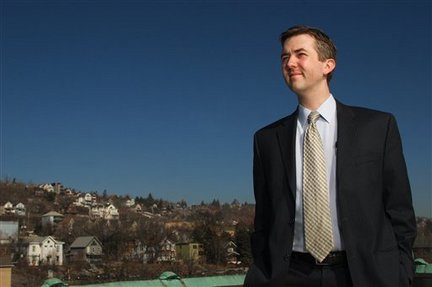
Don Ness was elected Mayor of Duluth in 2008, just as the American economy was imploding. The city had a debt of $1.35 million, was being sued by the federal government, had massive sanitary sewer overflows into Lake Superior, and lacked a strong plan for building the infrastructure and retaining young professionals. Ness took a no-nonsense approach to solving these issues, and in 2011, due largely to his strong-willed methodologies, he was the first mayor to run unopposed since Duluth was incorporated in 1887. He has also earned a 90% approval rating and has increased the General Fund Reserve by over $8 million.
In an interview that seems to serve, at times, as a how-to guide on successful economic and infrastructural development, Mayor Ness spells out several strategies that have benefitted his city. Still, he points out that certain problems, such as expanding housing in the downtown area, continue to prove highly problematic no matter what policies community leaders and businesses attempt to broker. We also discussed how some of Mayor Ness’s plans could be adapted to fit Colorado Springs’ needs.
————————-
Yordy: You mentioned the Duluth Economic Development Authority [DEDA]. I’ve read that it plays a vastly important role in fostering the growth of many businesses. Why did you choose to restructure these agencies, and what were some of the difficulties in attaining that goal?
Ness: Our DEDA, the economic development authority, is an independent group. It’s not necessarily the umbrella group. We have different economic development agencies that all play a particular role. Prior to my becoming mayor, they were all operating independently. So what we did was bring together an economic development coalition, called the “Mayor’s Economic Development Coalition,” and we meet at least once a month, and everybody kind of brings their projects to the table.
The expectation is that there’s an open dialogue and everyone shares information freely. We’re going to respect the confidentially of the agreement, or of the news that’s shared there, but it gives us an opportunity to pitch in and to contribute our resources to help another agency move a project forward, instead of what would happen in the past when people would hold projects really close and say, “Well this is my project, and I don’t want anybody else taking credit if this turns out well.” But really, leaving a lot of tools and a lot of resources on the table, projects weren’t as successful as they could have been.
Yordy: Right. And that makes sense, when everybody works together as opposed to fighting against each other.
Ness: Yep.
Yordy: Mayor Bach [of Colorado Springs] proposed moving our local baseball stadium from the east end of town to the more centrally located downtown area to try to generate more business [Since this interview, the proposal to move the Colorado Springs Sky Sox’s stadium to downtown Colorado Springs has been altered to a plan that would “accommodate more Olympic sports and not be as focused on baseball”]. Have you had any big ventures that your organization has benefited from, such as something almost as big as moving a baseball stadium?
Ness: Well, yeah. I guess it’s probably now about six years ago. There was a debate on where the new hockey arena would be built, and the chancellor of the university wanted it to be an on-campus facility. The old arena was in the downtown area and on our waterfront, and people wanted that to remain, so that was an interesting debate. In the end, the community rallied around keeping the stadium in the core city and passed a referendum to build the arena that got big support.
We’ve always felt like strengthening the core city is really important to support those local businesses rather than spreading those amenities further out to the edges of the community, where you’re picking winners and losers a little bit more at that point because whatever neighborhood you’re going into, they’re going to have that benefit as well as greater logistical problems in terms of handling traffic and creating parking for events that may happen 20-30 times a year. Whereas in a core city, because you have the parking lots, the roads are built to accommodate larger numbers of cars, you put those amenities where the infrastructure can handle that volume.
Yordy: Right. Denver is very well organized, but the way Colorado Springs grew with the military bases being put on the outskirts of the city, we would get these massive growths from those sections of the military base, and the urban planning wasn’t very efficient. So of course you get these huge pockets of restaurants and entertainment venues in random parts of the city that aren’t centrally located in the downtown area.
Ness: The bases, are they about 15 minutes outside of the core city?
Yordy: It depends. We have Fort Carson on the south end, which is a large army base, and all the way on the north end you have the Air Force Academy, and then a few air bases out east, so the east side has grown, but that’s all it really is. It’s all expanding away from the central downtown area of Colorado Springs. It creates complications with businesses trying to expand in that central area because you only attract a certain amount of people. Not many people would come into the city from the east side when they have a stadium and all these other new amenities.
In reference to urban projects, I watched a hearing on one of our organizations, the Urban Renewal Project. They were attempting to assess a fee of $1.25 million from a $3.2 million project, and Mayor Bach had to go in, re-assess their fee, reduce it to $250,000, so I was curious if you’ve had examples of similar issues as Mayor of Duluth. Also, how do you deal with an organization’s possible self-serving motives or their inefficient allocation of funds?
Ness: So, this was some type of non-profit or development agency that had the ability to raise funds through assessment?
Yordy: It’s a development agency, and this was their fee for redesigning an older part of town, and this was what they assessed their fee to be over a span of 25 years.